Blog / · 6 min read
Codex is leaving the terminal. That is when it gets serious.
Codex is moving into GitHub, mobile, IDEs, and shareable apps. The topic is no longer only the agent that codes, but where its work becomes visible.
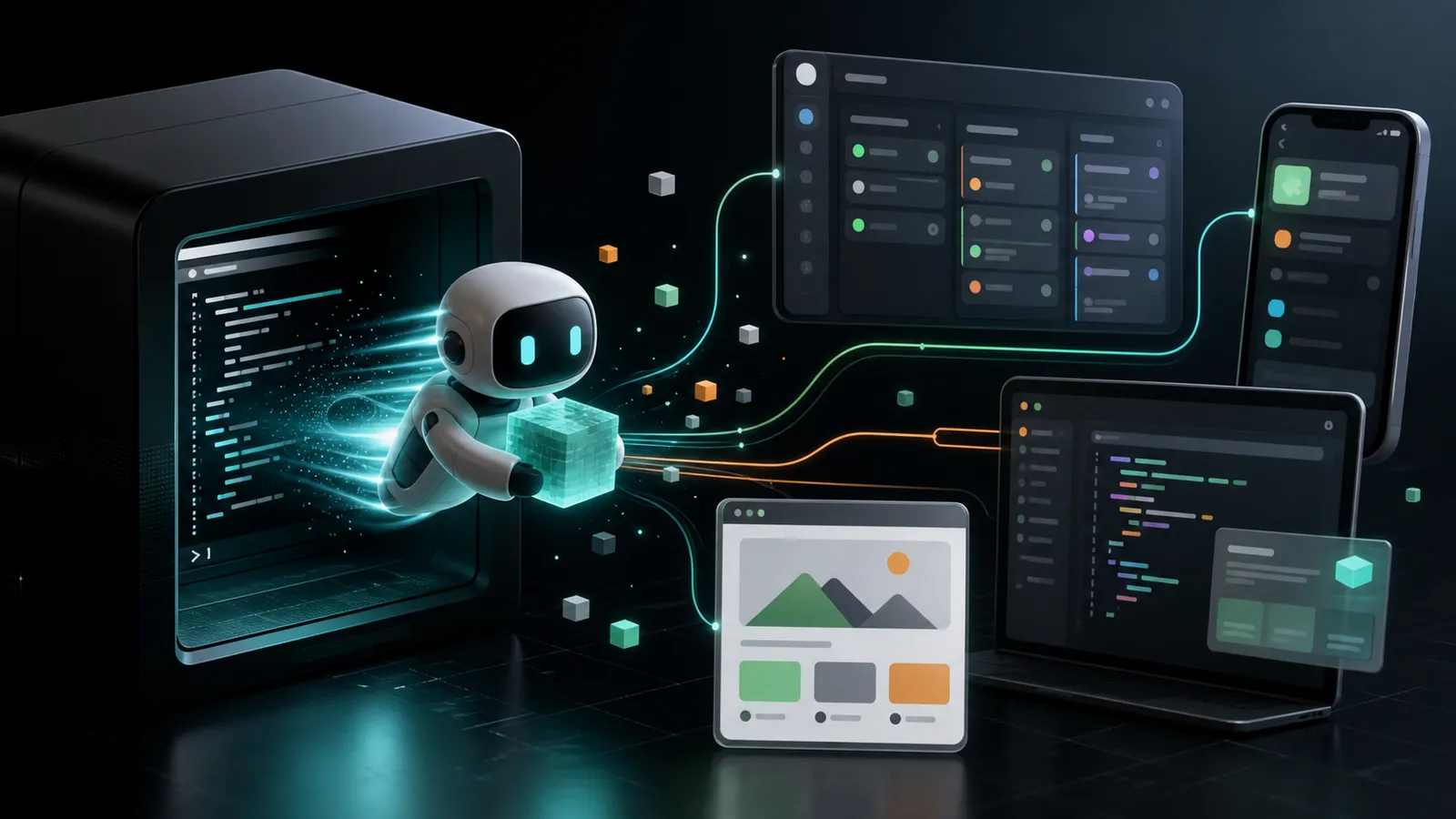
At first, Codex still looked like a developer tool.
A terminal. A repo. A task. A diff. A PR.
Powerful already, but mentally comfortable: a coding agent for people who code.
Recent announcements change one important detail. Codex is moving closer to GitHub, IDEs, mobile, and surfaces where it can produce shareable interactive sites and apps.
In other words: Codex is leaving the terminal.
And when an agent leaves the terminal, it does not only change developer workflows. It starts changing how a product team creates, shows, validates, and discards ideas.
The coding agent was a tool. It is becoming a work surface.
A coding tool takes an instruction and modifies a repo.
A work surface does more:
- receives a request from a ticket;
- produces a visible artifact;
- lets someone comment;
- keeps a trace;
- integrates into the decision cycle;
- makes work shareable with non-developers.
That is where it gets interesting.
As long as Codex lives only in the terminal, it stays in developer hands. When it appears in GitHub, mobile, business workflows, and enterprise surfaces, it starts touching PMs, designers, ops, founders.
Not because everyone becomes a developer.
Because more people can trigger software work without opening an editor.
The real product is delegation
OpenAI describes Codex as an agent that can work on many tasks in parallel in isolated environments. GitHub already lets agents start from issues, PRs, VS Code, or the web interface. The direction is clear.
The product is no longer “write code”.
The product becomes: delegate a technical intention to a system that knows where to work.
Examples:
- “prepare a variant of this landing page”;
- “fix the bug in this issue”;
- “add CSV export to this dashboard”;
- “make a first pass on this technical debt”;
- “turn this brief into a clickable prototype”.
The output can be a PR. But it can also be a preview, a temporary site, a report, a branch, or a blocker checklist.
The diff is only one output format among others.
It will change the developer role, but not how people say
The lazy narrative says: “developers will disappear”.
No.
What disappears is part of the monopoly on starting technical work.
Before, if a PM wanted to test a small product variation, they had to convince a developer, wait for a slot, write a ticket, pass through the backlog. Tomorrow, they may launch an agent that prepares a branch or prototype, then ask for review.
That does not remove the developer.
It moves the role toward:
- defining guardrails;
- reviewing changes;
- maintaining architecture;
- deciding what deserves to be merged;
- turning disposable prototypes into durable software.
The danger is not that non-developers create prototypes. The danger is merging prototypes as if they were production code.
Debt will be created faster
An agent that makes creation cheaper also makes excessive creation more likely.
We will see branches everywhere. Page variants. Temporary components. Scripts that were “just for testing”. Prototypes that were supposed to die and stay because a customer saw them.
Generation speed increases.
Deletion discipline must increase too.
The mature workflow is not “Codex can create everything”. It is:
- create fast;
- show fast;
- discard fast;
- keep only what deserves real integration.
The ability to delete will become a product skill. Less glamorous than “vibe coding”, much more important.
Mobile is more interesting than it looks
Codex in a mobile app can sound like a gimmick. Nobody will review a serious Laravel migration on a phone screen.
But that is not the use case.
The use case is:
- launch a task after a meeting;
- comment on a result;
- approve a direction;
- request a variation;
- check that an agent is not blocked;
- read a clean summary.
Mobile turns the agent into an asynchronous colleague. Not a miniature IDE.
For founders, PMs, freelancers, and small teams, that is concrete. An idea captured at 6:12 PM can become a branch ready to review at 7.
Whether that is a good idea is another question. But technically, the path is opening.
Where I stay cautious
The more accessible the agent becomes, the more permissions matter.
An agent launched from GitHub or mobile must know:
- which repos it can touch;
- which commands it can run;
- which data it can read;
- whether it can push a branch;
- whether it can open a PR;
- whether it can trigger a preview;
- whether it must ask before some actions.
Otherwise, we replace “an intern pushed to main” with “an agent changed something because someone phrased a request badly”.
Delegation without guardrails is not autonomy. It is fog with permissions.
The cultural shift
The most interesting point is not technical. It is cultural.
Teams will need to learn how to write requests that produce good software. Not magic prompts. Work briefs.
A good Codex brief should look like a good ticket:
- context;
- objective;
- non-goals;
- files or areas involved;
- acceptance criteria;
- verification commands;
- freedom level;
- expected output format.
The difference is that the ticket no longer sleeps in a backlog for three weeks. It can start executing immediately.
So bad briefs will cost something faster.
My verdict
Codex leaving the terminal is a bigger step than it looks.
Not because the agent suddenly becomes magic. Because it enters the places where decisions happen: GitHub, IDEs, mobile, previews, team workflows.
The next battle will not only be “which model codes best”.
It will be: which tool turns a fuzzy intention into a reviewable artifact without polluting the product?
Whoever wins that will not just be a coding assistant. It will be a new layer of software production.
And like every production layer, it will need something demos often forget: rules.
Sources
Keep reading