Blog
Architecture, craft, AI and full-stack development.
-
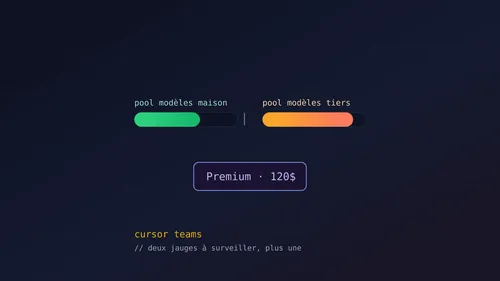
Cursor Teams now has two fuel gauges. Good luck driving that.
Cursor announces more included usage for its Teams plan and a new Premium seat at 120 dollars. Except now you have to watch two separate usage pools instead of one. The simplicity of the flat plan just took another hit.
-
Your coding agent trusts metadata. That's the problem.
A new attack disguises malicious content as trusted metadata and takes down Claude Code, Codex, and Gemini CLI. A review of 78 studies confirms it: current defenses aren't keeping up. What this actually changes in your workflow.
-
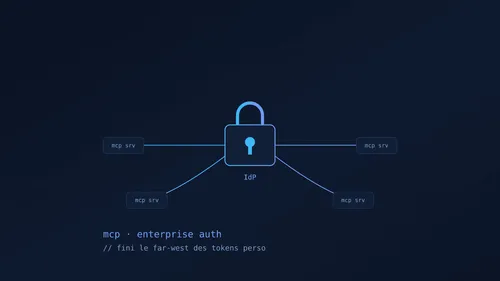
MCP just lost its indie-hacker status: IT security got the keys back
Every dev with their own token buried in a config file, convenient and completely out of control. The EMA extension pulls MCP back into IT compliance. What it fixes, what it complicates, and why the solo dev doesn't gain much from it.
-
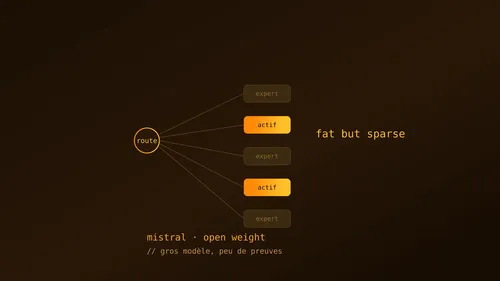
Mistral is back with a "fat but sparse" MoE: the sovereignty bet with no proof attached
Arthur Mensch announces a massive new open-weight model, in restricted early access since July. No public benchmarks, no announced license. Just a promise to catch up with the frontier, made in Europe.
-
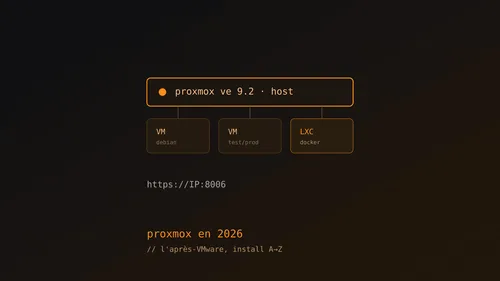
Proxmox VE in 2026: why everyone's talking about it again, and how to install it without screwing it up
The Broadcom email that blew up VMware bills put Proxmox back on everyone's lips. Version 9.2, free license, install from A to Z: the full tutorial to build your own hypervisor without losing a weekend.
-

DeepSeek-V4 lands mid-July: 1M context, prices in freefall, and I'm still keeping a foot on the brake
1.6 trillion parameters, a context window announced at 1M tokens, prices that make your head spin. Except open-weight doesn't mean open-bar, and an announced context isn't a context you can actually use.
-

Fable 5: suspended, restored, given away free for ten days, then pulled back. Welcome to the era of the volatile model
Anthropic cut off Fable 5 under an export control order, brought it back, gave it away free on Pro/Max/Team for ten days, then locked it back to API-only. What this yo-yo really tells developers building on top of it.
-

Sol, Terra, Luna: OpenAI just turned Codex into a vending machine
GPT-5.6 ships in three pricing tiers inside Codex. On paper it's flexibility. In reality, you have to guess which model is going to code your task — and how much it'll cost before you find out.
-

MCP is getting a new skeleton: what the 2026 protocol overhaul will break for you
Sessions removed, state moved into handles, auth aligned with OAuth. If you already have MCP servers in production, this RC is not a minor version bump. Here's what's actually changing.
-

Superpowers Symfony goes subagents: the plugin that delegates on its own
The new version swaps some skills for 7 Symfony subagents that auto-delegate. Good idea, or one more black box in your workflow? An honest take.
-

Grok 4.5: Private Beta Signal, Not Public Availability Yet
xAI’s Grok 4.5 appears in reports as a private beta for SpaceX and Tesla, while the publicly documented model lineup still centers on grok-4.3 and grok-build-0.1. A practical take for builders.
-
Grok 4.5: announced for July 9, but API production readiness is still pending
The launch announcement is clear, but the technical contract for production migration is not fully published yet. Here is what teams should act on now.
-

AI agents are about to become customers. The web isn't ready.
With x402, Coinbase, AWS, and Cloudflare aren't just talking about blocking AI bots anymore. They're sketching out a web where agents pay, consume, and negotiate access.
-

GPT-5.5-Cyber: security agents are no longer just scanners
OpenAI unveils GPT-5.5-Cyber as part of Daybreak. The important part isn't detection alone, it's the full loop: find, verify, fix, prove.
-
Kimi K2.7 in GitHub Copilot: open-weight enters the enterprise workflow
GitHub adds Kimi K2.7 to Copilot. The real story isn't the benchmark: it's the model picker, governance, cost, and trust in coding agents.
-

x402, MCP, and paid APIs: pay-per-request is back, agent edition
x402 could turn APIs, datasets, and MCP servers into pay-per-request resources. Interesting for small SaaS products, dangerous without limits and observability.
-

AI Act: on August 2, 2026, AI builders meet useful paperwork
The AI Act becomes fully applicable on August 2, 2026 for several obligations. What this changes for AI products, without legal panic.
-

Coding-agent benchmarks lie less than before. We still read them wrong.
SWE-bench, Terminal-Bench, agent leaderboards: numbers are improving, but they do not tell you whether an agent will survive your codebase.
-

Claude Sonnet 5: the "good enough" model is now the real story
Sonnet 5 lands in Claude and GitHub Copilot. Not the flashiest model, but probably the one that will run most real developer workflows.
-

Clean Architecture with Laravel: stop putting all business rules into Eloquent
Laravel is fast at the start. Clean Architecture becomes useful when the domain grows beyond CRUD: actions, DTOs, ports, repositories, fast tests, progressive migration, and the limits to know.
-

Codex is leaving the terminal. That is when it gets serious.
Codex is moving into GitHub, mobile, IDEs, and shareable apps. The topic is no longer only the agent that codes, but where its work becomes visible.
-
CQRS: what it is for, when to use it, and when to avoid it
CQRS separates writes and reads. It is not magic architecture, and it does not require Event Sourcing. Here are the real use cases, costs, traps, and a pragmatic Symfony Messenger implementation.
-

Clean Architecture with Symfony: keep Doctrine, Messenger, and the container in their place
Symfony already encourages clean services, but that is not enough. Here's how to isolate the domain, structure use cases, wire Doctrine and Messenger, and know when the cost is justified.
-
Cursor lands on iPhone. It is not a mobile IDE, and that is the point.
Cursor launches its iOS app in public beta to control agents from your phone. The real topic is not coding on mobile, but delegating, tracking, and validating software work away from your desk.
-

AI credits won. The magic flat-rate coding plan is dead.
GitHub Copilot moves to credit-based billing, coding agents keep proving expensive, and developers now need to learn how to manage AI spend.
-

Claude Opus 4.7 dropped today. Here's what actually changes for a dev.
Anthropic released Claude Opus 4.7 on April 16, 2026. SWE-bench Pro at 64.3%, +13% on coding, a new xhigh tier, unchanged pricing. A hot-take analysis for developers.
-

237€ of Claude API in March. Here's where the money went.
An honest breakdown of a month of Claude API usage in 2026: which tasks cost the most, where prompt caching saved 40%, what's worth the cost and what isn't.
-

I let an agent work for 8 hours while I slept. Here's the report I woke up to.
A raw field report: a Claude Code agent launched at midnight in autonomous mode on a migration. What shipped, what broke, and the review debt waiting at sunrise.
-

Computer Use, 1 month of testing. What works, what doesn't.
An honest report after a month using Computer Use with Claude. The tasks where it genuinely changes the workflow, the ones where it's still smoke and mirrors, and my verdict.
-

Stop defaulting to Opus. Haiku is enough 70% of the time.
A one-month A/B test: when Haiku 4.5 matches Opus 4.7, and costs 25x less. A decision table by task type, and a concrete field report.
-

Prompt engineering is dead. Context engineering took its place.
Why "magic prompts" have been useless since Sonnet 4.5, and what replaced them: context hierarchy, CLAUDE.md files, and memory architecture.
-
MCP servers, the real surprise of 2026
While everyone argues over GPT-5 vs Opus, the MCP ecosystem is quietly maturing. A tour of the servers that actually change your workflow, and why it's Claude Code's real moat.
-

Claude Code CLAUDE.md: Documentation That Codes With You
Optimal structure for CLAUDE.md — project conventions, business context, known pitfalls. How to guide AI without micro-management. Real examples of configurations that work.
-

Claude Code Hooks: Keep Your Codebase Clean Automatically
PreToolUse and PostToolUse hooks in Claude Code let you automate quality rules: no console.log, sorted imports, mandatory tests. Concrete configuration with Symfony and React examples.
-
Free Custom Email with Cloudflare Email Routing
How to get a professional email address with your own domain for $0/month using Cloudflare email routing. Complete step-by-step setup guide.
-
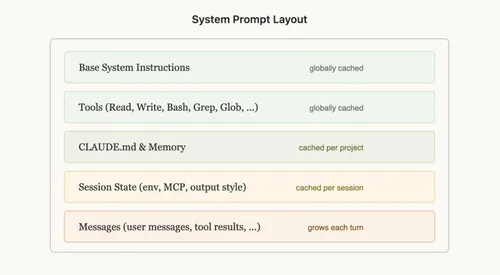
Lessons from Building Claude Code: Prompt Caching Is Everything
Thariq Shihipar (Anthropic) shares lessons from optimizing prompt caching at scale. Prompt ordering, messages vs system, cache-safe compaction — what makes Claude Code viable.
-

Claude Code: AskUserQuestion Now Displays Markdown
Claude Code's AskUserQuestion tool can now display markdown snippets to present diagrams, code examples, and more to users.
-
Claude Code: New /simplify and /batch Skills to Automate Your PRs
Anthropic introduces two new skills in Claude Code: /simplify for code cleanup and /batch for parallelizable migrations. Together, they automate the path to production.
-
Claude Code Agent Teams: From Solo Agent to Coordinated Team
Anthropic just shipped Agent Teams in Claude Code. A lead agent, parallel teammates, a shared task list. Complete guide to configure and use them effectively.
-

Claude Opus 4.6: 500 Zero-Days and the Vibe Working Era
Anthropic just launched Claude Opus 4.6. It found 500 zero-day vulnerabilities, shook Wall Street, and opens the 'vibe working' era. Breakdown for developers.
-

Cursor vs Cline vs Copilot vs Claude Code: Which AI Coding Tool in 2026?
85% of developers use AI for coding. Cursor, Cline, GitHub Copilot, Claude Code: technical comparison, use cases, and strategy for choosing the right tool.
-
GPT-5.3 Codex vs Claude Opus 4.6: The AI Coding War
OpenAI and Anthropic launched their new models minutes apart. GPT-5.3 Codex vs Opus 4.6: technical comparison and impact for developers.
-

Web Performance and Core Web Vitals: Optimizing Your Score in 2026
LCP, INP, CLS: complete guide to optimize your Core Web Vitals. Concrete techniques for Next.js, Nuxt, and Astro sites.
-
Monorepo with Turborepo: Organizing a Full-Stack PHP + TypeScript Project
Structure your full-stack monorepo with Turborepo. Symfony/Laravel backend + Next.js/Vue frontend in a single efficient repo.
-
Superpowers Symfony: 49 Skills to Code with Claude Code Like a Senior
I created a Claude Code plugin with 49 Symfony skills. TDD, Doctrine, API Platform, CQRS, Messenger: feedback on an open source project with {{github-stars:MakFly/superpowers-symfony}}+ stars.
-

Generative AI in Developer Workflow: Beyond Autocompletion
Integrate generative AI into your dev workflow: code review, tests, documentation, architecture. Tools and methods for seniors.
-
E2E Testing with Playwright: Strategies for Full-Stack Applications
Robust E2E testing strategy with Playwright. CI/CD, fixtures, Page Object Model: complete guide for Symfony, Laravel, and Next.js projects.
-

Building an Expert Sub-Agent System for Claude Code with MCP
How I created GLM Delegator: 5 expert agents (architecture, security, code review) for Claude Code via the MCP protocol. Technical guide and feedback.
-

BetterAuth Symfony: Rethinking Authentication for Symfony 7
I built a modern authentication bundle for Symfony. OAuth, 2FA, magic links, multi-tenant: feedback on design and technical choices.
-

Vue.js Composition API: Advanced Patterns and Reusable Composables
Go further with Vue 3's Composition API: advanced composables, dependency injection, and state management with Pinia.
-
React Server Components and Next.js App Router: The Definitive Guide
Master React Server Components with Next.js 15. Server vs Client, streaming, data fetching: everything for 2025.
-

Product Management for Senior Developers: Thinking Product Daily
How a senior developer can integrate product thinking: prioritization, impact mapping, metrics, and dialogue with business. Practical guide.
-

Software Architecture for Modern Web Applications: Complete Guide 2025
Hexagonal, Clean Architecture, CQRS: discover essential architecture patterns for your Symfony, Laravel, and Next.js applications.